We just wrapped up our first campaigns at Dreamforce in San Francisco, and I wanted to break down what we actually built. All three brands took a completely different approach, and all three worked for different reasons. If you're a B2B tech company trying to figure out what "high-impact OOH at a conference" can actually look like beyond a booth, this is a good one to study.
Quick context before the breakdowns. A high-impact OOH (out-of-home) activation at a tech conference means taking your brand physically outside the convention hall: wrapped vehicles, branded transportation, and coordinated fleet deployments (we call these SWARMs) that put your brand in front of attendees in the streets, hotel lobbies, and rideshare lines around the venue, not just on a booth banner inside it. Done right, it's the difference between being one of two hundred logos on a trade show floor and being the thing everyone's talking about by day two.
Here's how three different brands used it at Dreamforce.
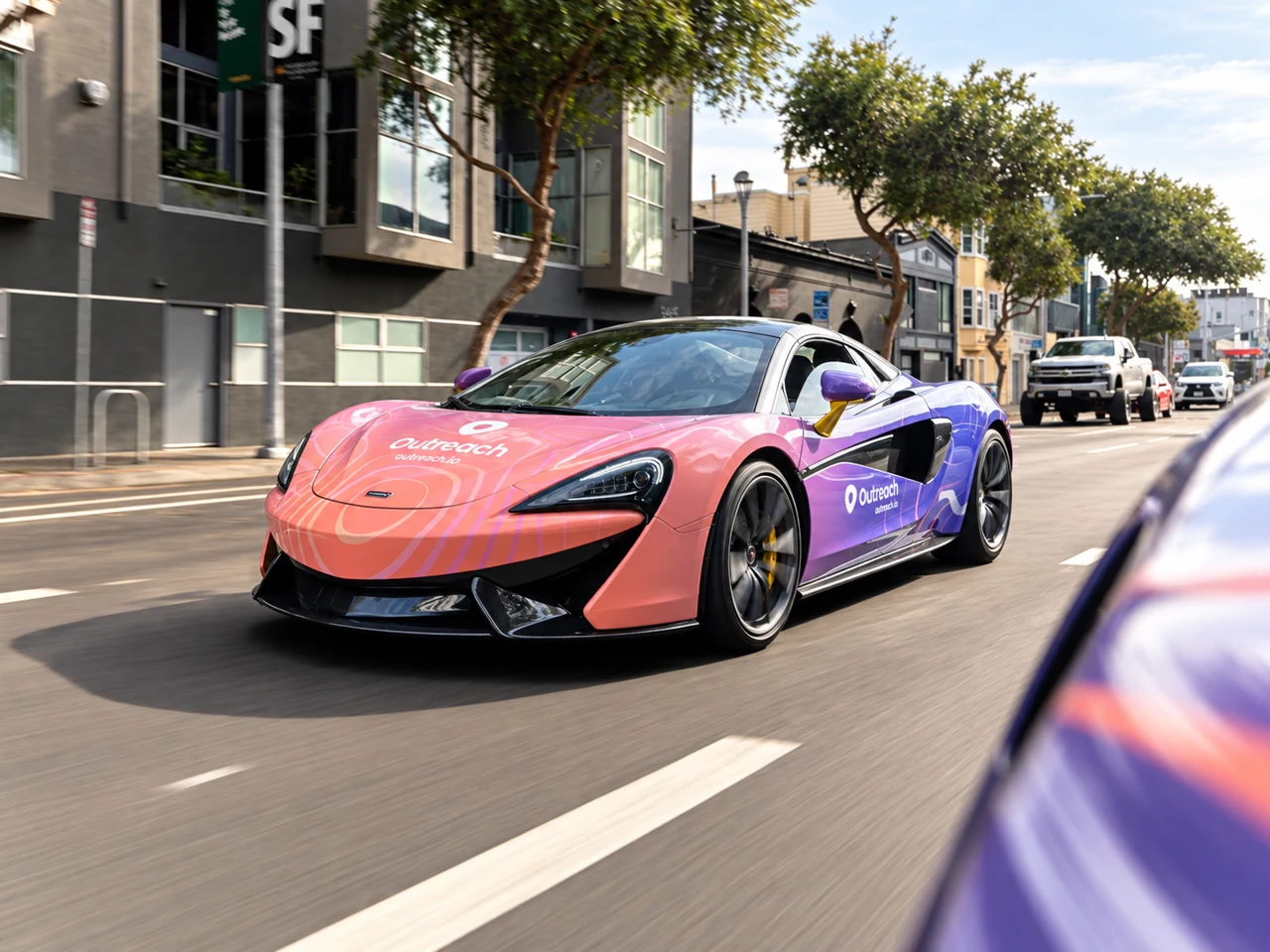
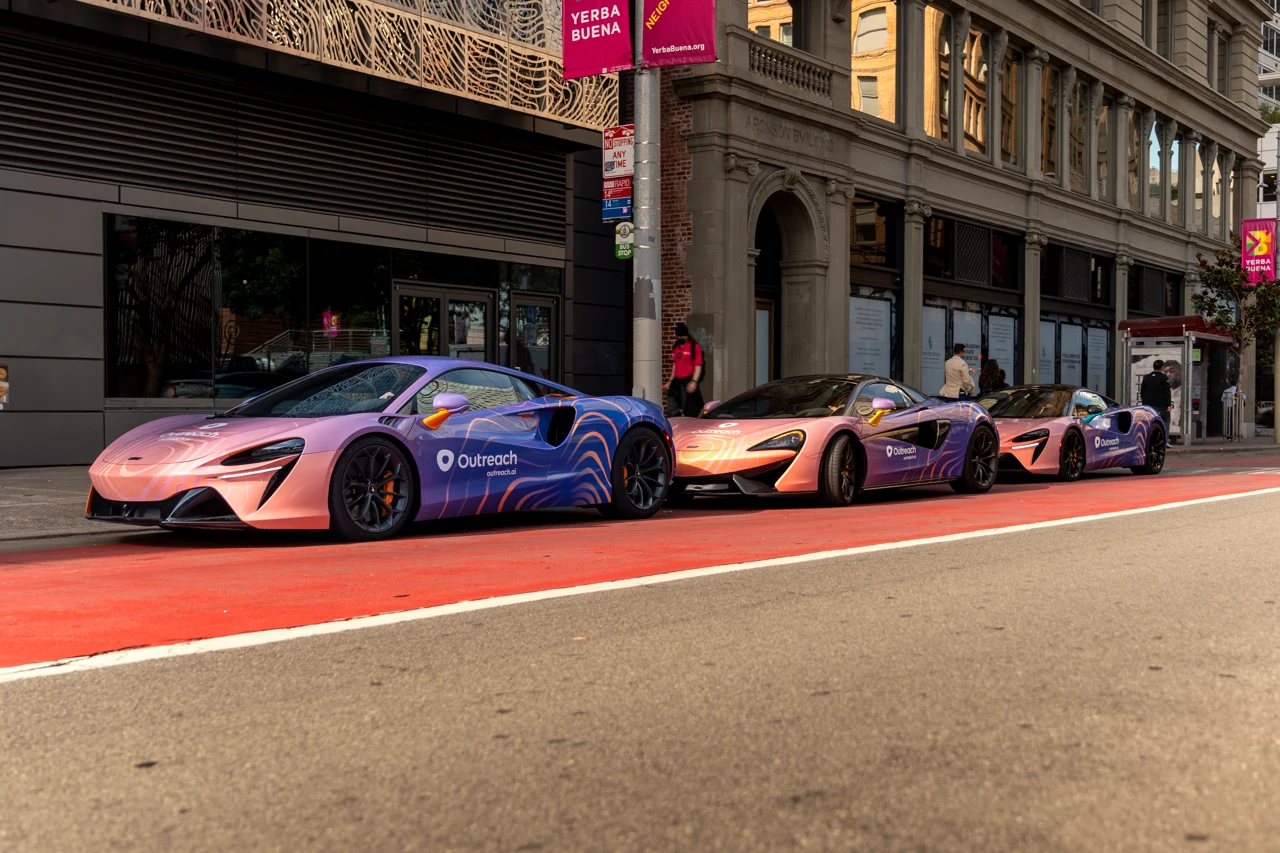
Outreach: three McLarens, one memorable presence
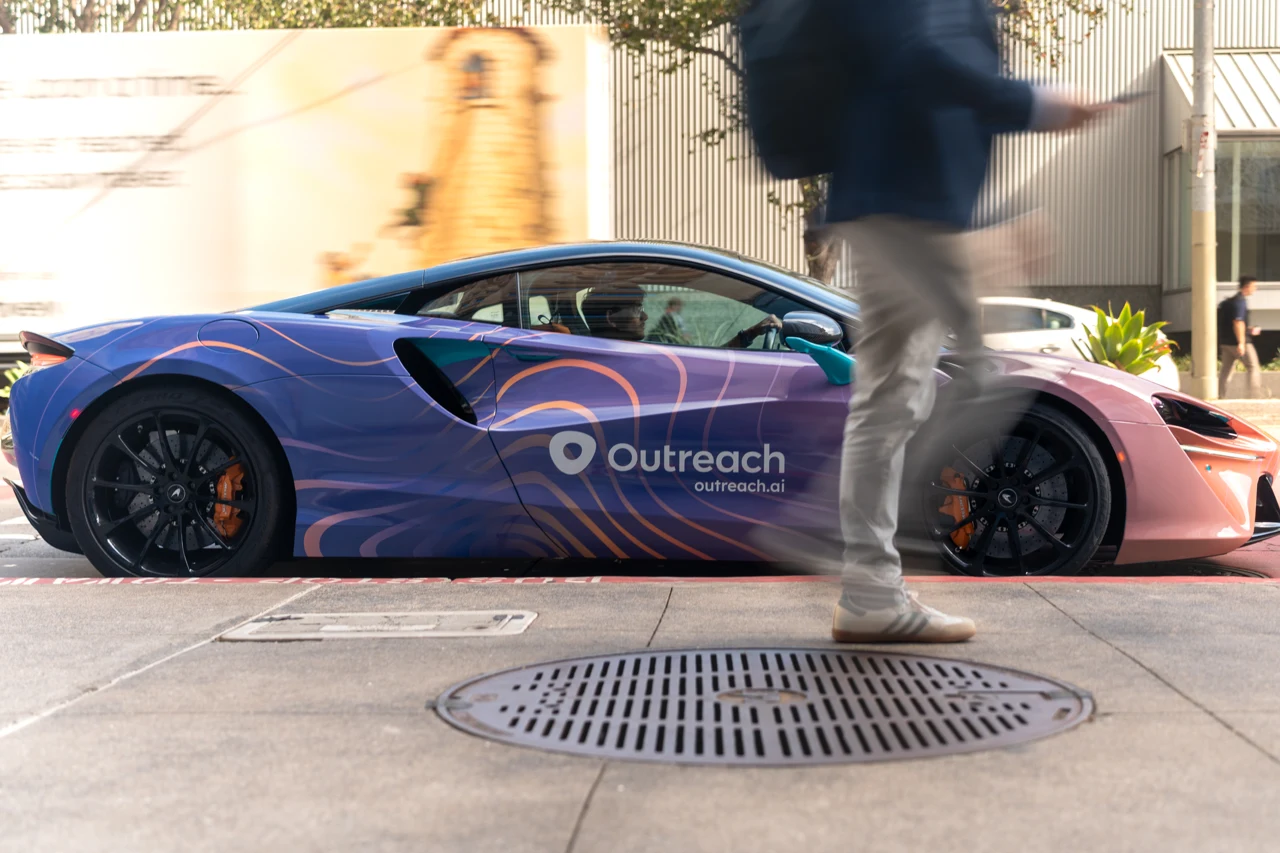
The concept: Go big, go fast, go memorable. Outreach wrapped three McLarens top to bottom in branded livery and ran them in a slow parade loop around Moscone Center for the full duration of the event.
The execution: This wasn't just a drive-by. We hosted a full photoshoot and videoshoot with the cars, ran a staff showcase so the Outreach team could pose with the fleet, and, the highlight, gave Outreach's CEO an actual ride in one of the McLarens. That's content that writes itself: your own CEO in a wrapped supercar outside the biggest event of the quarter.
Why it worked: Exotic vehicles do something a standard fleet wrap can't. They stop people. A wrapped McLaren outside a convention center gets photographed whether or not anyone knows the brand yet, and once they look close enough to read the wrap, that's a cold impression turned warm in about three seconds.
Crosby: a funeral for the billable hour
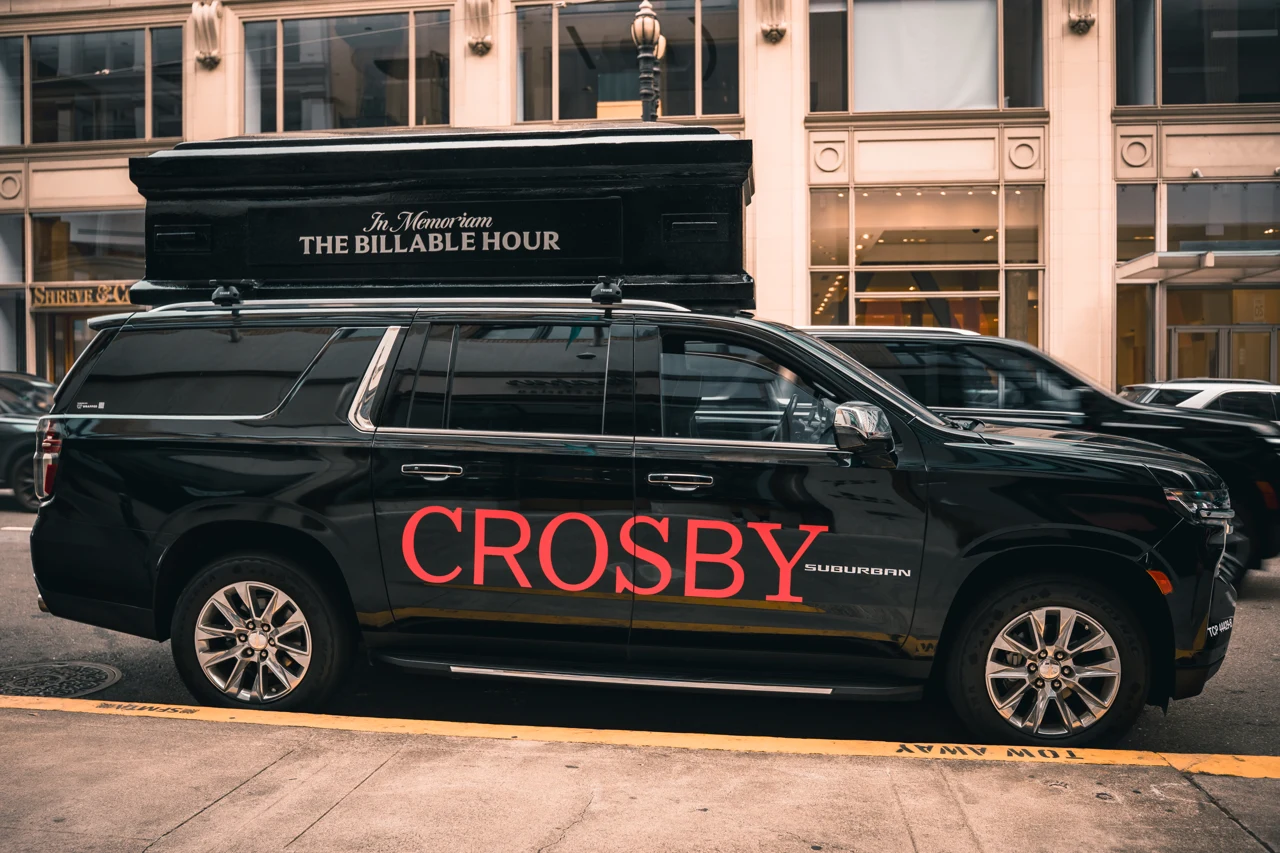
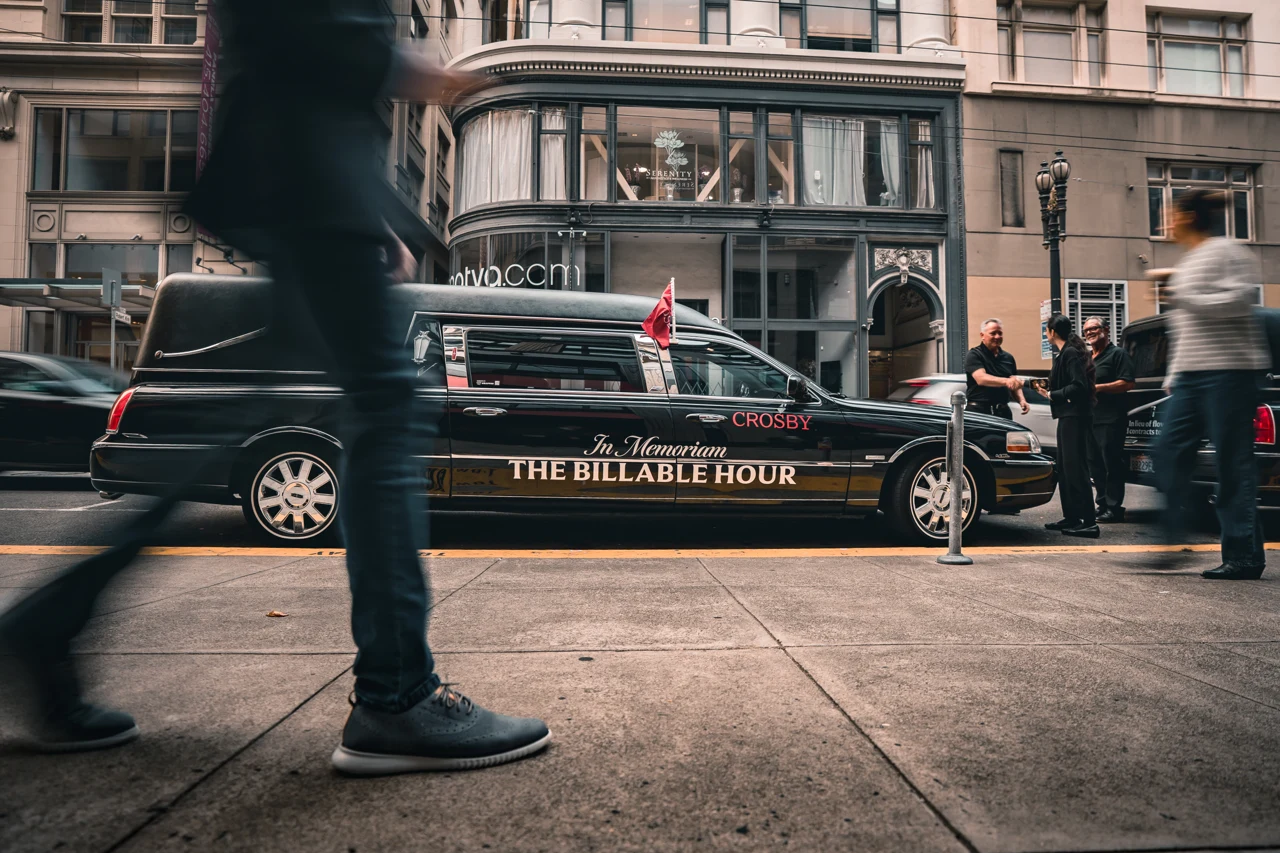
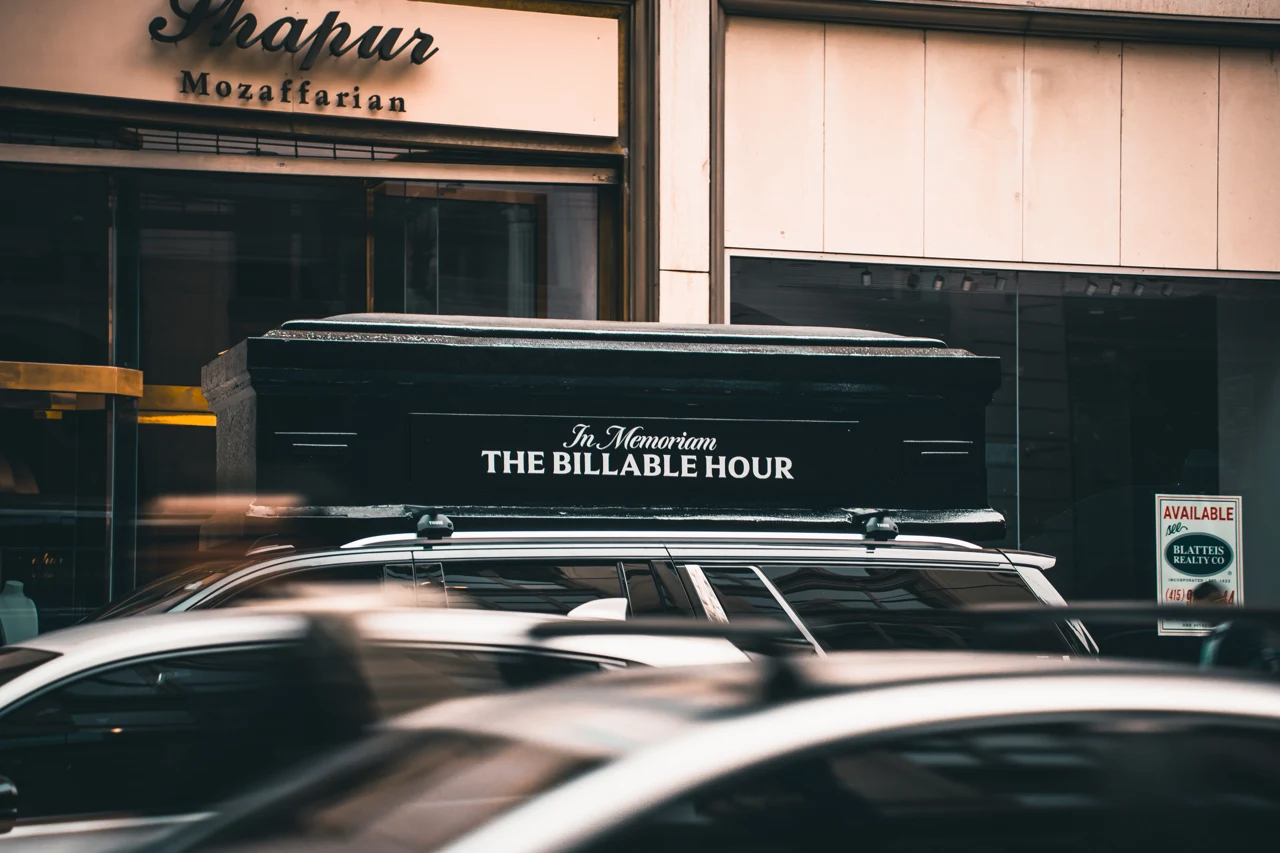
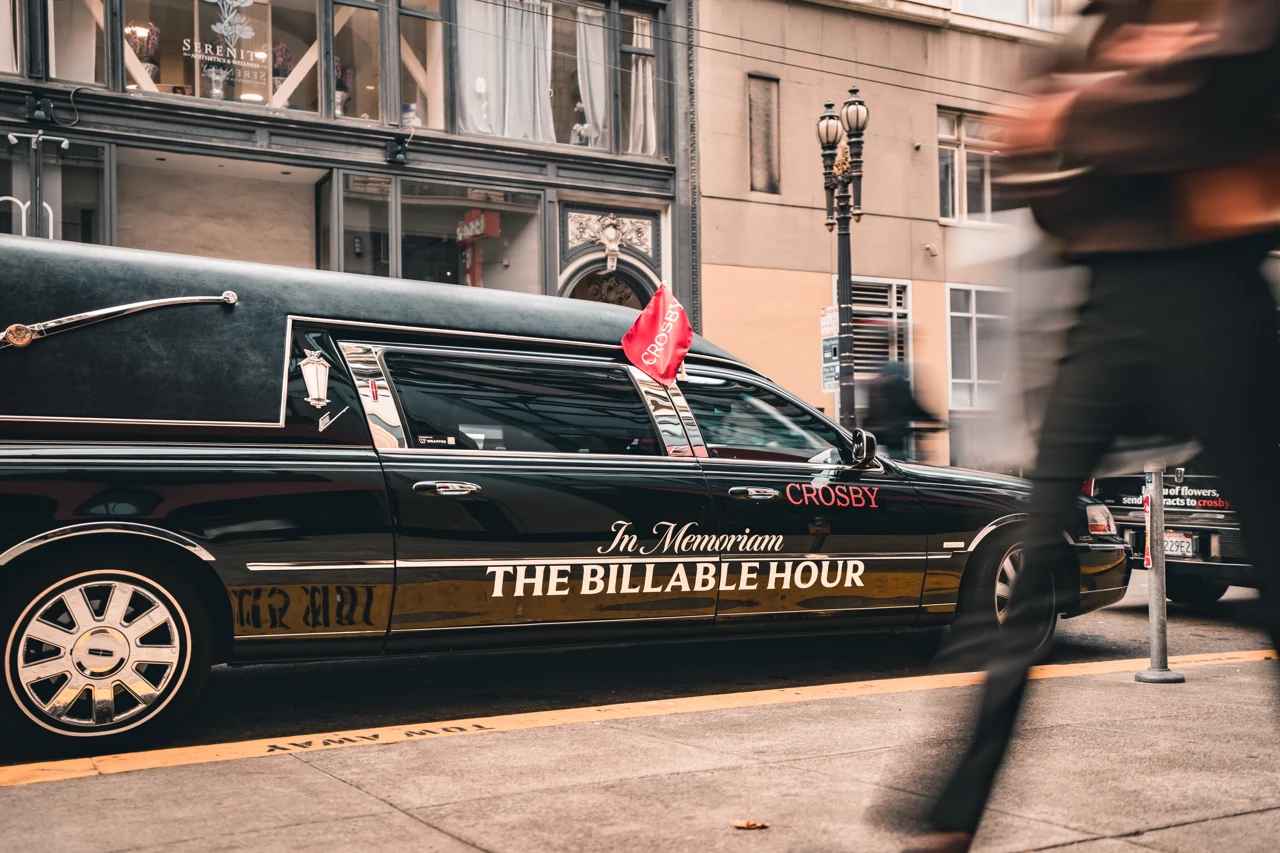
The concept: This one's my favorite execution of the week. Crosby AI's whole positioning is "death to the billable hour," so instead of a car wrap, we built an actual funeral procession. 3 hearses. 5 black SUVs. And mounted to the roof of the lead vehicle, a 10' x 3' x 3' casket, custom-built, impossible to miss.
The execution: The procession moved through the streets around Moscone as a literal funeral for the billable hour: somber pace, full motorcade formation, the casket as the obvious centerpiece.
Why it worked: This is what happens when the creative concept actually matches the brand's core message instead of just slapping a logo on a car. Nobody walks past a hearse-and-casket motorcade without stopping to figure out what's going on. It's the kind of OOH activation that gets photographed, posted, and talked about at every happy hour for the rest of the conference, because it's not an ad, it's a bit, and people want to be in on the bit.
WalkMe: a useful ride, a real conversation
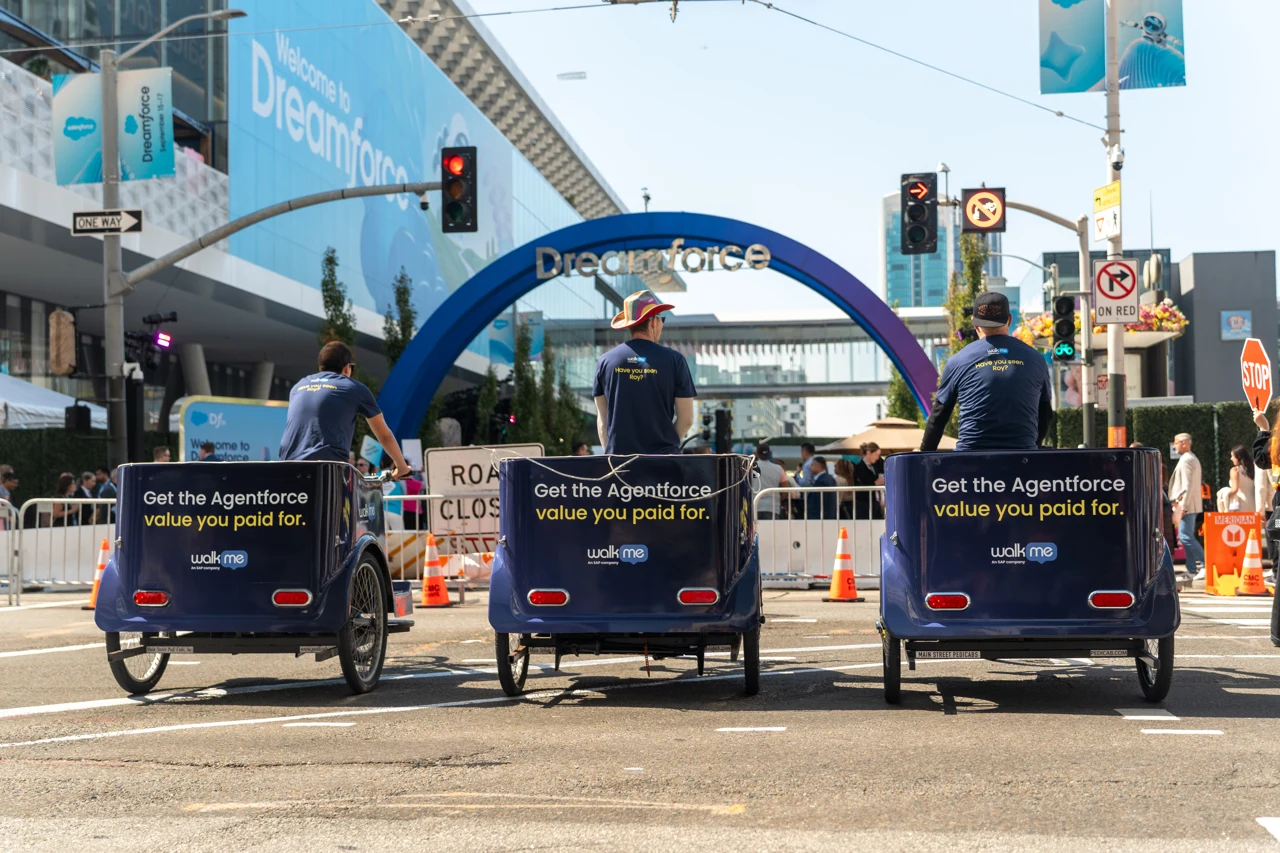
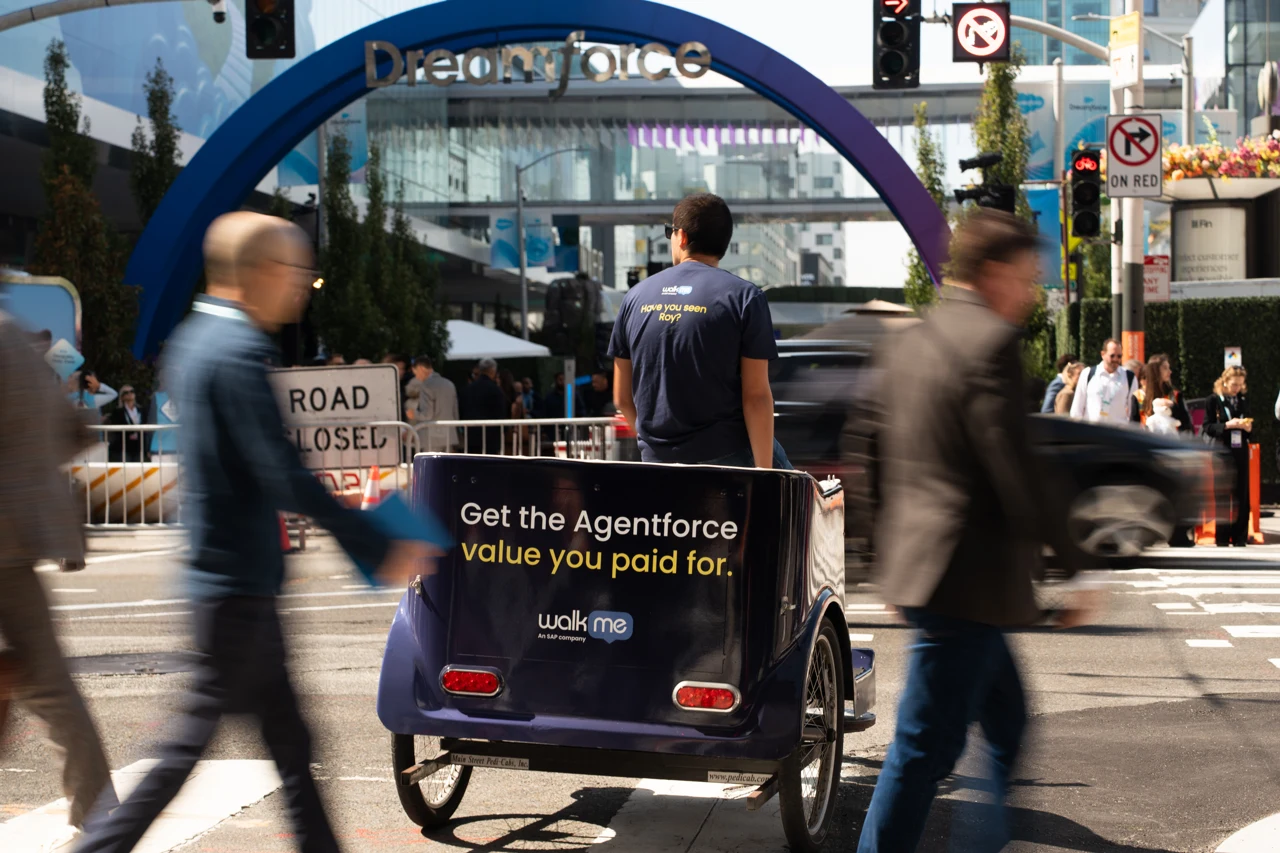
The concept: Lower-key than the other two, and just as effective in a different way. WalkMe ran a fleet of branded pedicabs offering free rides around Moscone Center, with swag handed out to riders along the way.
The execution: Attendees walking between sessions or back to their hotel could hop in a WalkMe pedicab instead: free, branded, and a built-in conversation with an ambassador for the length of the ride.
Why it worked: This is the Free Rides model in its simplest form. Give people something genuinely useful (a free ride, in a city where conference-week Ubers are a nightmare) and you get face time, goodwill, and a captive few minutes to actually talk to a prospect instead of hoping they stop at your booth.
What connected all three campaigns
Three completely different budgets, vehicle types, and creative concepts, exotic supercars, a funeral motorcade, and pedicabs, but the same underlying formula:
- A SWARM presence: multiple vehicles, not one, circulating the venue for the full event instead of a single static placement
- A concept tied to the brand, not just a logo slapped on a wrap: Outreach went aspirational, Crosby went for shock value tied directly to their positioning, WalkMe went for genuine utility
- A people-facing component: a CEO ride, an ambassador conversation, a branded moment attendees could actually participate in, not just look at
- Built-in shareability: every one of these was designed to be photographed and posted, which extends the campaign's reach well past the people who were physically there
That combination (fleet presence, concept, human interaction, and shareability) is what separates a high-impact conference OOH activation from a car with a sticker on it.
Conference activation questions
What is a SWARM campaign?
A SWARM is a coordinated deployment of multiple branded vehicles around a specific venue or event, rather than a single vehicle on a fixed route. It creates concentrated, repeated brand exposure in one high-traffic area over the course of an event.
What is a "Free Rides" activation?
Free Rides is a branded transportation activation where wrapped vehicles, standard cars, pedicabs, or specialty vehicles, offer complimentary rides to conference attendees, usually with a brand ambassador on board, creating real face time instead of a passive ad impression.
Why do B2B tech companies use OOH at conferences like Dreamforce?
Conference floors are crowded with competing booths. OOH activations outside the venue, wrapped vehicles, pedicabs, exotic cars, experiential concepts, give a brand presence in the parts of the event where relationships actually form: the walk to the venue, the ride back to the hotel, the conversation in line.
Does the vehicle type matter for a conference OOH activation?
Yes. Standard gig-fleet wraps are built for efficient citywide coverage at scale. Exotic or specialty vehicles (like a wrapped supercar or a themed motorcade) are built to stop people and generate outsized social and word-of-mouth reach. The right choice depends on whether the goal is broad coverage or a single unmissable moment.